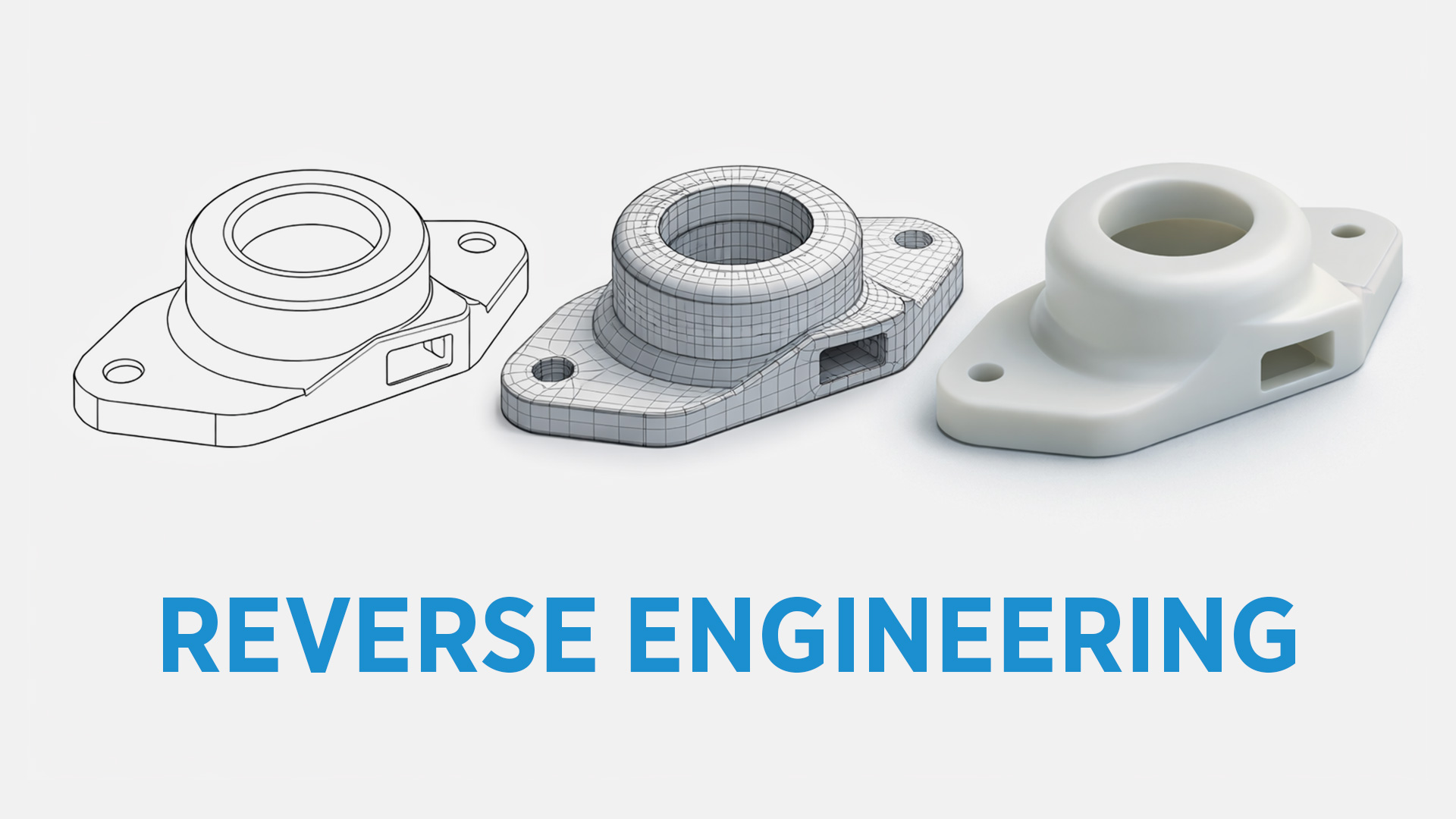
In machine and plant maintenance, one of the most frequent issues is the need to replace components that are no longer available. This typically happens with older machinery, custom-built lines, or equipment for which the original manufacturer no longer supplies spare parts.
In these situations, being able to reproduce the component is essential to keep production running. VR Plast evaluates each case individually, identifying the type of part required and the most suitable method to reproduce it.
Not every component needs a full reverse engineering process. Some parts are simple, standard, or easy to reproduce. In these cases, direct measurement and conventional machining are sufficient. When geometries are straightforward, dimensions can be measured with traditional tools, and the function is not critical, the part can be produced without advanced scanning or digital reconstruction.
The situation changes when the part includes complex geometries, shaped surfaces, profiles that are difficult to measure, or critical interfaces with other machine elements.
In these cases, manual measurement may not be enough to produce a reliable spare part. There is a risk of inaccuracies that can lead to assembly issues, premature wear, or malfunction during operation.
When the component is complex, reverse engineering becomes necessary to accurately reconstruct the part and make it suitable for production again.
For mechanical components, both metal and plastic, reverse engineering involves analysing an existing part to obtain a reliable technical basis for reproduction.
The goal is not to approximate a worn component, but to define a precise geometric reference that reflects real operating conditions.
For more complex parts, VR Plast follows a structured process that allows the transition from the physical component to CNC production.
The part is captured using 3D scanning systems, allowing accurate detection of complex geometries and surfaces that cannot be measured with conventional tools.
Scan data is used to build a CAD model in STP format. Any deformation caused by wear is corrected, restoring the component to a functional geometry.
Material is defined together with the customer based on the application. Where needed, alternative materials can be suggested to improve wear resistance and service life.
The model is then used for production through CNC milling or turning, ensuring consistency and repeatability.
Reverse engineering can also support a more structured approach over time.
Once the component has been reconstructed and the CAD model validated, it becomes possible to:
This makes it possible to create a small internal stock of critical components.
This approach is particularly useful for:
Keeping a minimum stock of these parts helps reduce downtime and improves maintenance planning.
Reverse engineering is not always required, but it becomes essential when the complexity of the component demands it.
Being able to distinguish between simple and critical parts helps optimise time, costs, and reliability.
If you need to replace a component that is no longer available, or want to evaluate the creation of a stock of critical spare parts, we can analyse the part and define the most effective method for its reproduction.
On-time delivery of processed material is expected within 3-4 weeks after your order. We deliver worldwide.

We can handle your emergencies according to the production time needed for the part you require.

To receive your quote as quickly as possible use the online quote request. Get your quote.


 German
 Italian